Protect Vehicle Assets and Operational Uptime
Car parking shades in Saudi Arabia help corporate and industrial sites protect parked vehicles during long periods of heat, sun exposure, dust, and humidity. A properly planned system can reduce cabin heat buildup, improve employee comfort, and keep fleet vehicles more ready for daily use at offices, plants, yards, and contractor facilities.
We write this guide for facility managers, project engineers, procurement teams, developers, EPC contractors, and industrial site operators planning commercial projects rather than residential purchases. From our Dammam base, we support projects as a Saudi Aramco Verified Vendor, Vendor ID 10114822, and STAR Verified Contractor.
الأنظمة الهندسية لمظلات المواقف تساعد المواقع ذات الأساطيل الكبيرة على حماية المركبات وتحسين جاهزيتها اليومية. المظلة المناسبة ليست مجرد غطاء، بل جزء من تخطيط الموقع وسلامة الحركة واستمرارية التشغيل.
Define Commercial Parking Shade Requirements
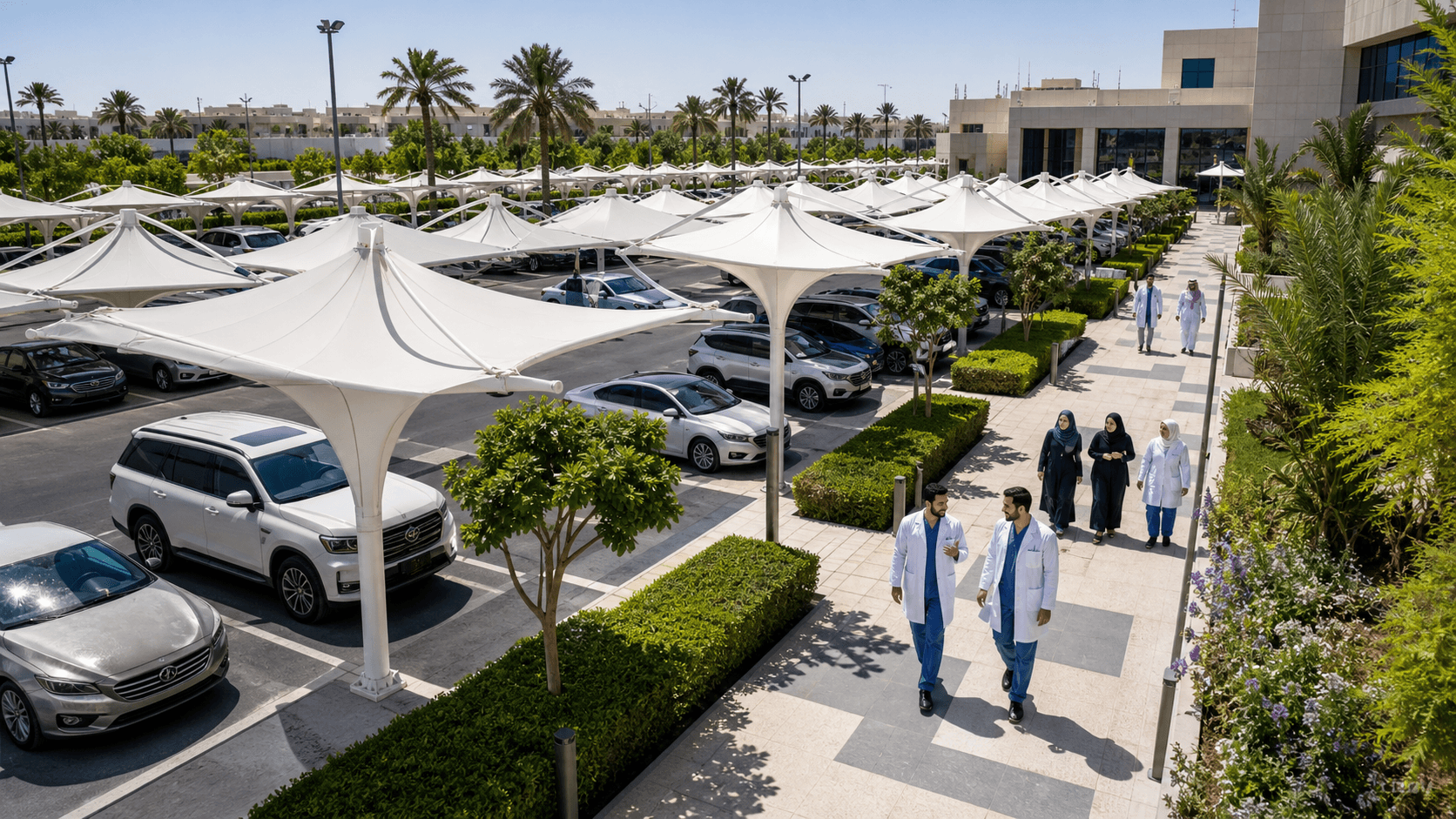
We commonly see shade requirements across corporate parking areas, oil and gas facilities, petrochemical plants, logistics yards, hospitals, retail developments, government facilities, and multi-site real estate portfolios. Each site has different traffic patterns, clearance needs, and operational limits.
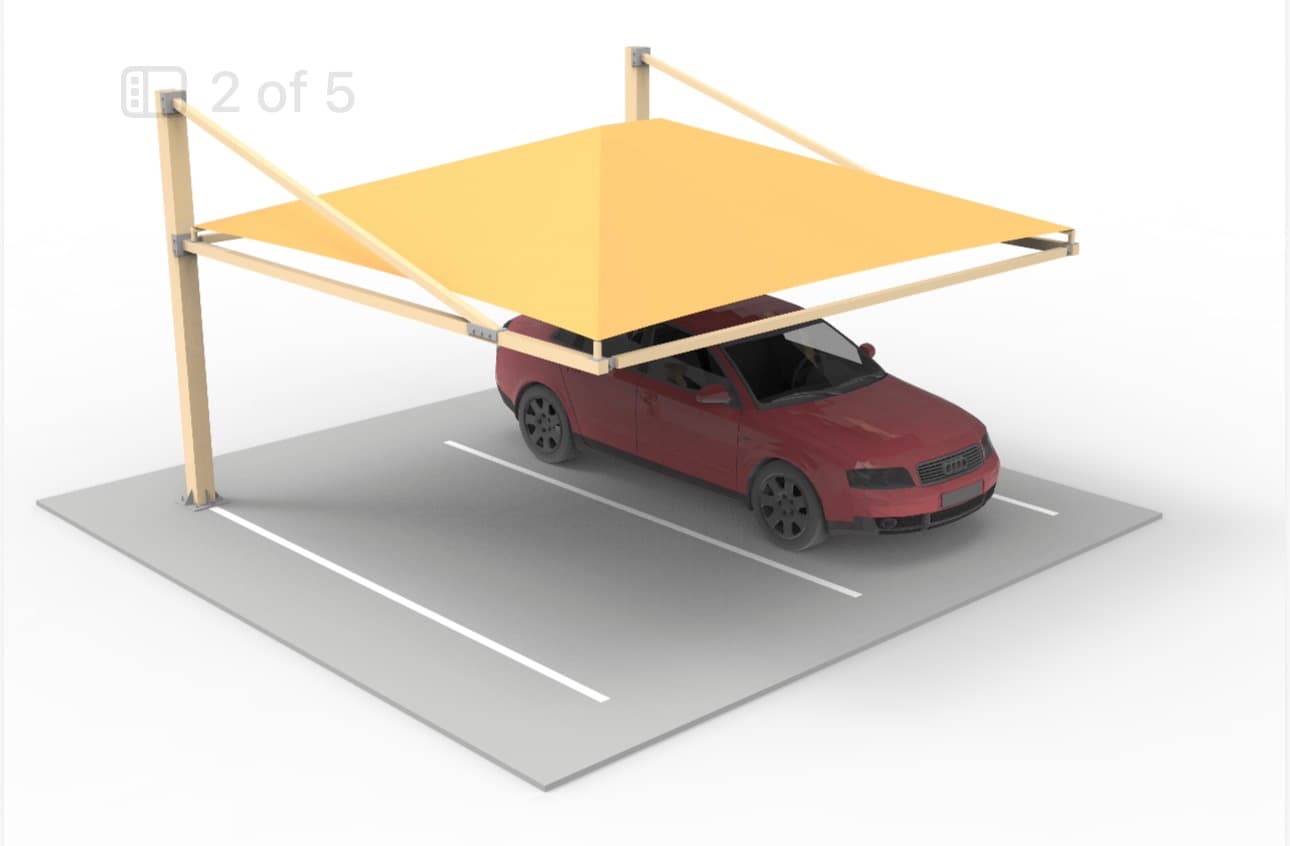
Cantilever parking shades are often preferred because they keep support columns away from vehicle doors and driving lanes. When the layout requires a different approach, we can assess single-post, double-post, arch, pyramid, and steel-frame systems. Tensile structures and sail shades may also suit selected pedestrian, architectural, or overflow parking zones.
Before requesting a quotation, prepare the following project information:
- Parking bay count and vehicle types
- Site dimensions, access routes, and traffic circulation
- Underground services, drainage conditions, and asphalt areas
- Required shade coverage, branding needs, and target handover date
اختيار شكل المظلة يجب أن يبدأ من استخدام الموقع وحركة المركبات والمتطلبات الفنية، وليس من اختيار تصميم جاهز من كتالوج. دراسة عدد المواقف ومسارات الدخول والخروج تساعدنا على اقتراح توزيع عملي وآمن للمظلات.
Engineer for Heat, Wind, and Corrosion
Saudi conditions place steady demands on parking shade systems. High temperatures, UV exposure, airborne dust, coastal humidity, and wind all affect material selection and structural detailing. This is particularly relevant for coastal and industrial locations in the Eastern Province, including Dammam, Khobar, and Jubail.
Canopy material should match the project specification and expected operating environment. HDPE shade net can provide an open, breathable shade solution. PVC-coated fabric is widely selected for its finished appearance and practical cleaning characteristics. PVDF-coated fabric may be specified where a cleaner surface finish and longer-term appearance are priorities. PTFE membrane options can suit specialized architectural applications where fire-performance requirements, visual finish, and lifecycle expectations call for a higher-grade membrane.
Steelwork matters just as much as the fabric overhead. We recommend reviewing steel grades, member thicknesses, galvanization, protective coating systems, connection details, foundation design, and wind-load calculations before commercial comparison begins. Project drawings should also reflect applicable local approval requirements and site-specific civil conditions.
Technical expectations on projects associated with organizations such as Saudi Aramco, SABIC, and Alfanar often require clear documentation, controlled fabrication, and disciplined installation planning.
قبل المقارنة التجارية، نوصي بتحديد أحمال الرياح، ومستوى الحماية من التآكل، ونوعية الحديد، ونظام الطلاء، ونوع القماش. هذه البنود تؤثر على عمر المظلة وأدائها، خصوصاً في المواقع الساحلية والصناعية.
Coordinate Civil Works, Safety, and Installation
A parking shade project involves more than fabric and steel supply. Depending on site conditions, supporting work may include excavation, concrete foundations, anchor bolts, drainage coordination, utility checks, asphalt reinstatement, and access planning for equipment and deliveries.
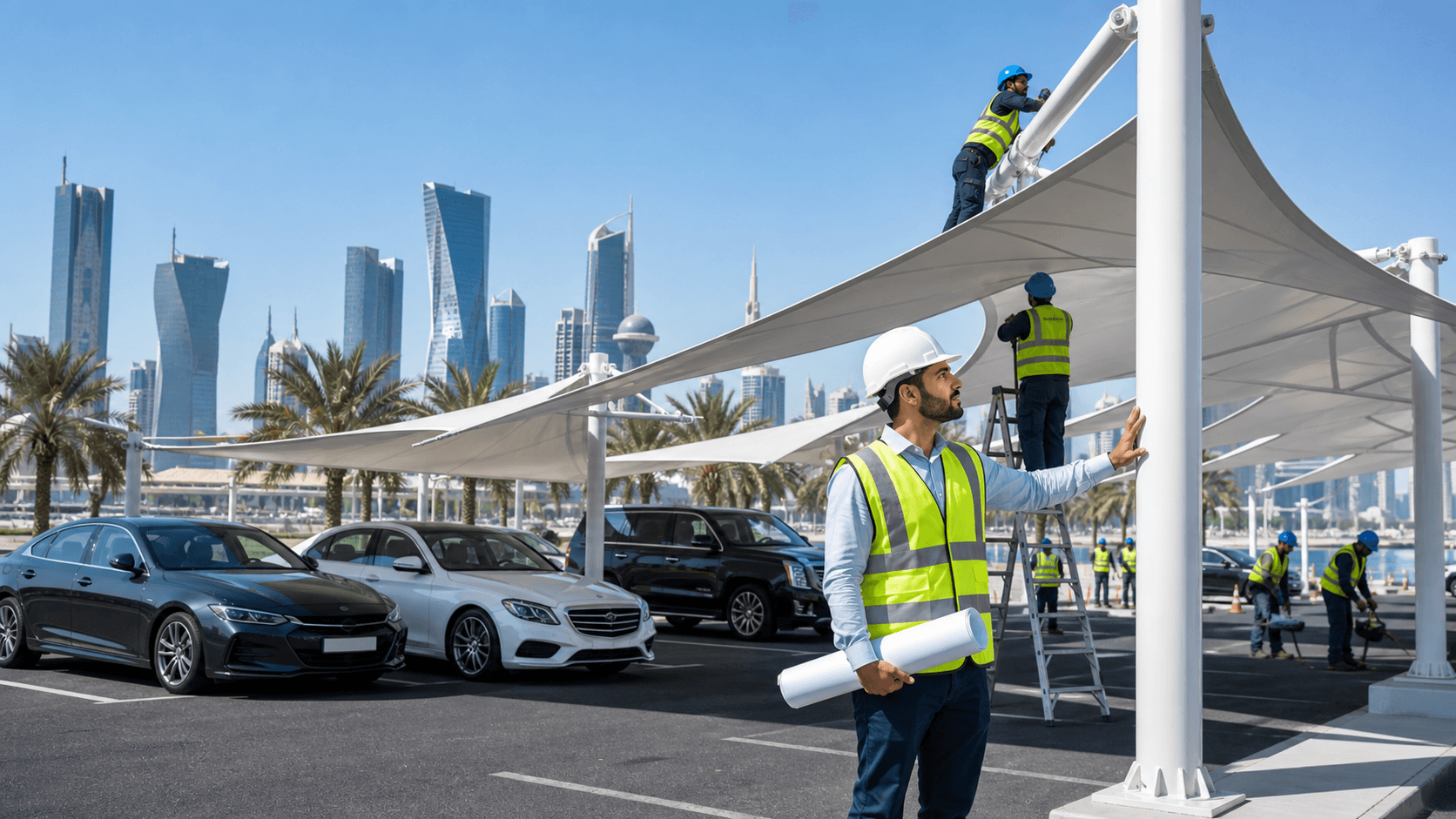
Our normal project sequence begins with a site survey and technical review. From there, the work can move through shop drawings, material approvals, fabrication, foundation works, steel erection, canopy installation, inspection, and handover documentation. Clear responsibilities between the contractor, consultant, and site team help prevent avoidable delays.
Safety planning is particularly important at operating oil and gas, petrochemical, logistics, and high-traffic corporate facilities. A controlled installation plan should address:
- Permit-to-work requirements and client HSE coordination
- Lifting plans, approved equipment, and trained personnel
- Traffic management and work-zone segregation
- PPE requirements and safe access around active parking areas
Phased installation can keep parking areas usable while work progresses. By completing shade zones in planned stages, we can reduce disruption to employees, contractors, visitors, and fleet movements.
الرسومات المعتمدة، وعمليات الرفع الآمنة، والأعمال المدنية المنسقة هي أساس نجاح مشروع المظلات. يجب التأكد من مواقع الخدمات الأرضية، وقواعد الخرسانة، ومسارات المعدات قبل بدء التركيب في الموقع.
Manage Budgets, Schedules, and Procurement
Project budgets for commercial parking shades depend on the structural concept, number of bays, steel weight, canopy specification, corrosion protection, foundation depth, site access, underground obstructions, approvals, and installation conditions. Complex geometry, restricted work areas, and operational safety controls can also affect the final scope.
We recommend that procurement teams compare more than the initial quoted amount. A low figure may exclude civil works, safety controls, coating requirements, foundation scope, or documentation that the project later requires. A useful comparison reviews the complete technical package, including:
- Detailed BOQ and structural concept drawings
- Steel thicknesses, coating systems, and fabric datasheets
- Quality documentation, warranty terms, and stated exclusions
- Project schedule, installation plan, and vendor credentials
Late summer is a practical period to define scopes, secure internal approvals, and prepare procurement packages for upcoming installation windows. This gives CAPEX teams time to review drawings, coordinate site access, and avoid rushed decisions when demand increases.
على فرق المشتريات مقارنة النطاق الفني وليس السعر فقط. يجب مراجعة المواصفات، وسماكات الحديد، ونظام الحماية، ونوع القماش، والأعمال المدنية، والبرنامج الزمني قبل تعيين مقاول المظلات.
Start with a Clear Site Assessment
For new or replacement shade systems, the most useful first step is a site survey supported by drawings, parking counts, and a realistic project timeline. We provide design, supply, installation, and supporting civil works for commercial and industrial projects across Saudi Arabia, including Riyadh, Jeddah, Dammam, Khobar, Jubail, Makkah, Madinah, Taif, Jazan, Najran, and Abha.
A clear technical scope helps project teams align shade coverage, vehicle circulation, civil works, safety controls, approvals, and handover requirements before quantities or budgets are finalized.
للحصول على عرض فني دقيق، يجب مشاركة مخططات الموقع، وعدد المواقف، وأنواع المركبات، والجدول الزمني المتوقع للمشروع.
كما يساعد التقييم الميداني المبكر على تحديد مواقع الأعمدة، ومناطق الظل، ومتطلبات القواعد الخرسانية، ومسافات الحركة الآمنة. هذه المعلومات تقلل التعديلات أثناء التنفيذ وتدعم إعداد نطاق واضح يتوافق مع ظروف الموقع ومتطلبات التشغيل.
Specify Durable Shade Solutions With Confidence
For commercial and industrial projects, our team delivers engineered car parking shades in Saudi Arabia designed around operational requirements, site loads, and long-term performance. Parking Shades KSA is a Saudi Aramco Verified Vendor, Vendor ID 10114822, with experience supporting demanding projects for clients including Saudi Aramco and SABIC. Contact us to discuss your project scope, technical requirements, and procurement timeline. نحن جاهزون لتقديم حلول مظلات مواقف سيارات مناسبة لمتطلبات مشروعكم.